
What is Organic Reach? 5 Tips to Improve It
5 min

5 min
What is Organic Reach?
Organic reach is the number of unique visitors who come to your social profile without paid promotion. Be it any social media account like Instagram, X, Facebook, or even your websites & ads.
Think of it as if you posted something on Instagram and 500 people saw it. You didn't run any ads. That's 500 organic reach.
The moment you boosted your Instagram post by paying an amount to the platform, you got 10k views. This 10k is your paid reach. And it goes the same with every platform.
Is Organic reach is Dead?
This is a common topic in Reddit threads. And the clear answer is NO. Organic reach can’t be dead. It will always hold more value than paid reach. Then why is this question trending? Because social platforms are behaving like it. If you look deep down into social platforms' behavior, you’ll notice a pattern, a weird one.
Facebook: organic reach for pages has dropped to around 1–3% of your followers
Instagram: most posts reach only 5–10% of your audience
LinkedIn: still the best right now, but declining steadily
X (Twitter): highly algorithmic now, unpredictable reach
But why is social media stopping social media growth by itself? Because platforms are businesses. The more organic reach dies, the more you have to pay to be seen. Simple as that.
4 Tips to Improve Organic Reach?
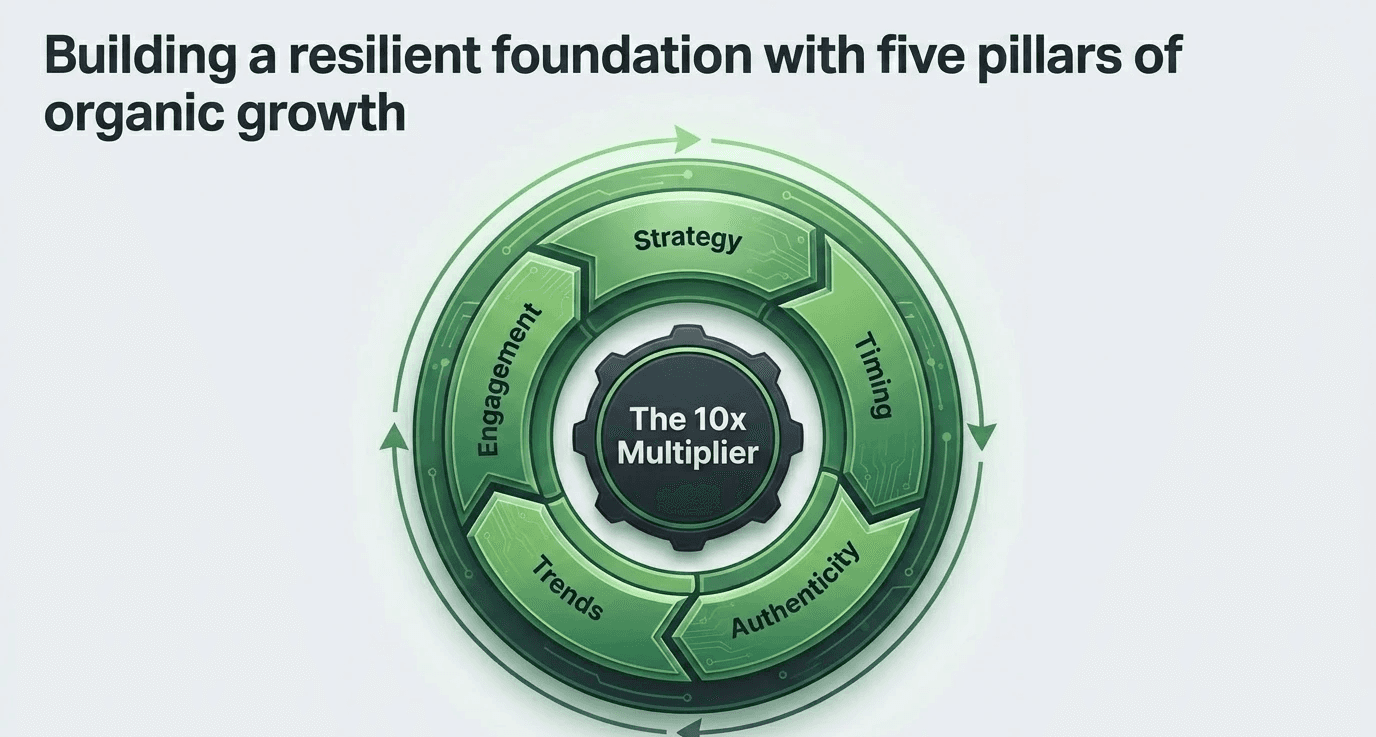
#1 Social Media Strategy
If you want organic reach, you have to build a solid media strategy. And for strategic social media growth, you have to set goals. SMART goals.
S: Specific
M: Measurable
A: Achievable
R: Relevant
T: Time-bound
#2 Post When Your Audience is Online
There is no point in posting content when your audience is not online. I mean, who are you posting for “ A WALL?”
Algorithms prioritize posts that attract engagement quickly after publishing, so make sure your audience is online when you post. To determine the best times to post manually, analyze your dashboards of each platform and track when people engage the most.
#3 Share Behind-the-Scene Content
If you want a community, then you have to make a connection emotionally and psychologically with your audience. So your competitor can come up with the same product, but not the vibe and authenticity. Because reality is something you don’t expect nowadays, that too with a brand. So be the unique one and grab a new audience.
#4 Work with Algorithm and Trends
If you are not posting an algorithm and trend, then just stop posting. Because you are literally saying we don’t want to be the trend. And if you are not posting to be the trend, then what’s the point of posting?
Look, think, analyse, and catch up on every trend you can catch. Blend it with your brand voice and just post it. People love the creative approach of marketing. And the algorithm supports the trend, not a random thought.
#5 Engage With Your Audience
People out there just love attention and customization. Now you don’t have to start texting each customer. Just be attentive and active on your socials. Likes are great, but comments, shares, and saves show deeper interest, which algorithms pick up on.
To build this kind of momentum, create posts that invite participation. Ask thoughtful questions, share helpful tips, or post insights that make people want to join the conversation.
Organic Reach vs Paid Reach
Organic reach and paid reach are two factors of social media. There is nothing completely right or wrong between them. You just have to choose what’s right for your brand. Here is the fair comparison between them.
Factor | Organic Reach | Paid Reach |
Cost | Free | Requires budget |
Speed | Slow to build | Immediate |
Longevity | Lasts long term | Stops when you stop paying |
Trust | Higher | Lower |
Best for | Long-term growth | Quick results |
Effort | High (consistency needed) | Low (set and run) |
Scalability | Slow | Fast |
Risk | Low | Higher (can waste budget) |
Algorithm dependent | Yes | Less so |
Best content type | SEO, video, community | Ads, promotions, launches |
Takeaway: Organic builds the foundation. Paid accelerates it.
What is Better Paid Reach or Organic Reach?
The right way depends on where you are and what you need. But ultimately, organic reach has an edge.
Why Organic Reach is Better for Long-Term Growth
Organic reach starts with the bottom, and it compounds. A good blog post, a strong YouTube video, or a well-optimised social profile keeps working for you months after you created it. You build an asset, not just a moment of visibility.
The biggest red flag in paid reach is that it disappears the second your budget runs out. Organic doesn't.
Why Paid Reach is Better When You Need Results Fast
If you have a product launch, a limited-time offer, or a new brand that nobody knows yet, paid reach gets you in front of the right people immediately. Organic takes time you might not have.
Paid is also better when you already know what content works. You take your best-performing organic post and put money behind it. That's when paid reach actually makes sense.
Is Relying Only on Paid Reach Risky?
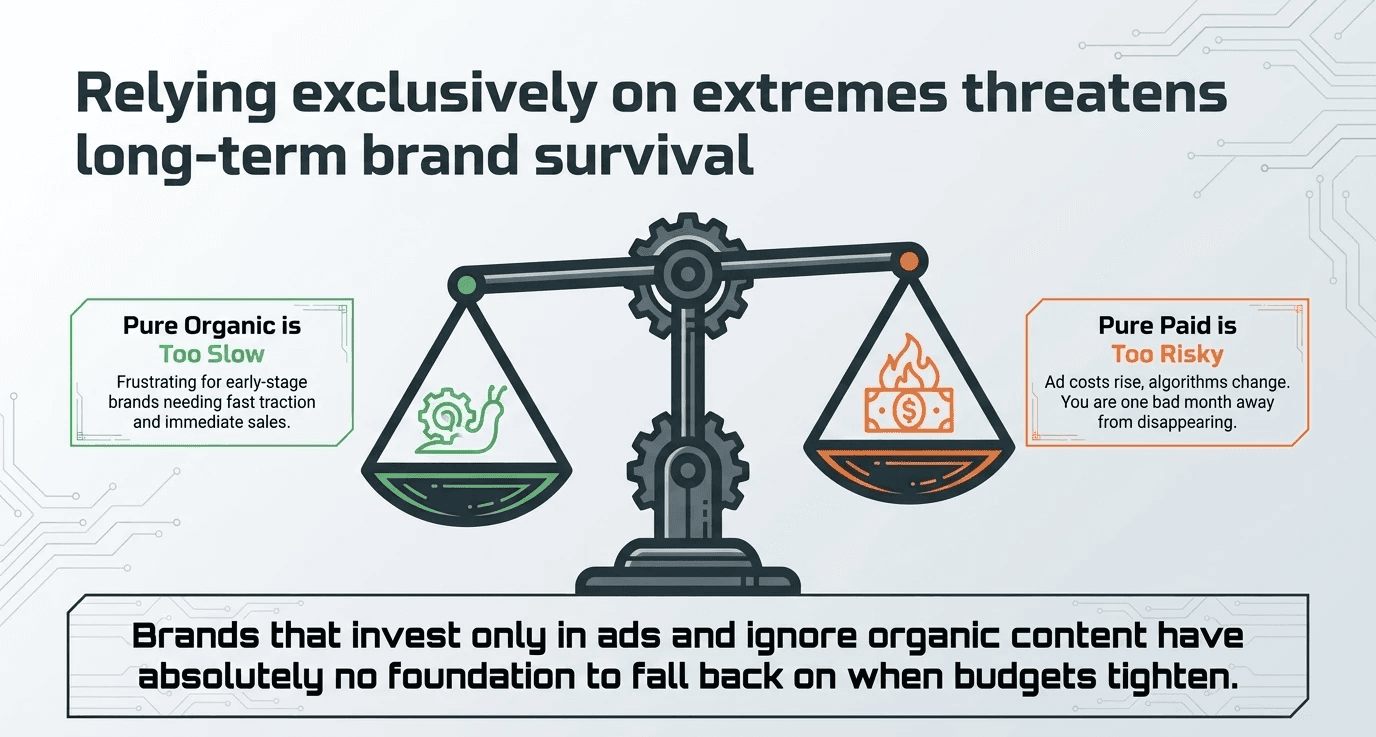
Yes, of course it is. Ad costs keep rising. Platforms change their algorithms. If your entire visibility depends on a paid budget, you're one bad month away from disappearing completely.
Brands that invest only in ads and ignore organic content have no foundation to fall back on.
Why Relying Only on Organic Reach is Slow
Organic reach takes patience. If you need sales this month, waiting six months for your SEO content to rank isn't going to help. Pure organic strategies can frustrate early-stage brands that need traction quickly.
Use Both Together
You don’t need to choose one of them; instead, blend them and let your socials grow.
Situation | What to Use |
Just starting, tight budget | Organic first |
Product launch or event | Paid for quick reach |
Content already performing well | Paid to amplify it |
Building long-term brand trust | Organic always |
Need leads this week | Paid |
Need leads six months from now | Organic |
Conclusion
There is no best and worst. Use what’s working for you. The simple calculation is to start with organic to build a foundation and understand what content resonates. Then use paid to amplify the stuff that's already working. Paying to boost a weak post is just burning money faster.
The smartest brands don't choose between organic and paid. They use organic to find what works and then pay to scale it.
Let’s connect to learn more about it and take a look at how affordable paid reach is and how accurate organic reach is. Click here.
FAQs
1. Is organic reach still worth it?
Yes. It takes longer, but it lasts longer. A good blog post or video keeps bringing in traffic for months without spending a rupee. Paid stops the moment your budget does.
2. How much does organic reach cost?
Nothing directly. You pay with time and effort, creating content, posting consistently, and engaging with your audience. No ad budget needed.
3. Can small businesses compete with organic reach alone?
Yes, especially through SEO and short-form video. Small brands that post consistently and target the right keywords can outrank bigger competitors who rely only on paid ads.
4. When should I start using paid reach?
Once you know what content works. Take your best-performing organic post and put budget behind it. Don't pay to boost something that's already flopping; it won't fix a weak post.
5. Which platform has the best organic reach right now?
LinkedIn and YouTube are the strongest for organic reach today. LinkedIn rewards original content heavily. YouTube videos rank on Google and compound over time. Both give you more free visibility than Instagram or Facebook currently does.
Give us a call
Related Blogs
SaaS Video Editor Jobs in San Francisco: What to Know Before You Apply
GPT-6 Astra and California tech hiring: what employers should change in 2026
Digital marketing jobs in the USA for freshers: roles, salaries, and how to actually get hired
Best AI Hiring Agency in the US: How to Choose the Right Partner in 2026
Claude AI as a Job Search Agent: What It Can (and Can't) Do for Job Seekers in the USA
Junior backend developer jobs in San Francisco: where to look and how to get hired
Top 10 IT Recruitment Agencies in California (2026)
WordPress developer jobs in the US: how hiring agencies actually fill them
AI UGC Video Editor Hiring Agency in San Francisco | TheFutureJobs
Content marketing jobs in Texas and New York: what hiring agencies are actually filling in 2026

Team
Legal
Privacy Policy
Legal & Rights