
Web developer jobs in San Francisco: where they are and how to get one
5 min

5 min
Searching "web developer" on job boards is the reason most people think San Francisco stopped hiring web developers.
The work did not disappear. The title did. Companies that would have posted a web developer opening a few years ago now post frontend engineer, full stack engineer, product engineer, or just software engineer, and the responsibilities inside those postings are the same work under a title that pays better and attracts more applicants. If your saved search is on the old term, you are looking at a fraction of the market and concluding the market is empty.
The second thing that trips people up is applying to the wrong tier of company. San Francisco has three distinct hiring ecosystems that barely overlap, and each one filters candidates differently. Sending the same application to all three is why people submit two hundred applications and get four responses.
This guide is for anyone looking for web development work in San Francisco, including candidates without professional experience, and it covers where the roles are, what gets tested, and how the application process actually works.
The titles to search instead
Search term | What the role usually is | Who posts it |
|---|---|---|
Frontend engineer | Web development with heavy focus on interface, state, and performance | Startups, mid-size tech, agencies |
Full stack engineer | Web development plus API and database work | Startups above all |
Software engineer, product | Feature work in a web product, often the same as full stack | Larger tech companies |
Web developer | Marketing site, CMS, and template work | Agencies, non-tech companies, nonprofits |
UI engineer | Design system and component work, often paired with designers | Companies with mature design teams |
Growth engineer | Landing pages, experiments, conversion work | Consumer startups |
Run all six searches. The overlap is smaller than you would expect, and the roles labelled web developer are often the least competitive and the least well paid, which cuts both ways when you are trying to get a first job.
The three hiring ecosystems
Large technology companies. Structured hiring, multiple interview rounds, data structures and algorithms questions even for frontend roles, and a strong preference for prior experience or a recognisable school. Applications typically pass through automated screening before a recruiter sees them. Slowest process, highest compensation, hardest entry point without a referral.
Funded startups. The largest share of web development hiring in the city. Interviews lean practical: a take-home project, a code review conversation, or pair programming on something close to their actual product. Hiring managers read applications directly at smaller companies, which means a good cover note actually works. Faster decisions, more responsibility, more risk.
Agencies, non-tech employers, and small businesses. Marketing agencies, healthcare, finance, universities, nonprofits, and city organisations all employ web developers to run their sites and internal tools. Lower profile, lower competition, and by far the most realistic entry point for someone without a professional track record. The work is often CMS-based, and the skills transfer well.
Most people aim exclusively at the first two categories and ignore the third, which is where the accessible jobs are.
What San Francisco employers test for
The stack expectations are consistent enough to plan around.
JavaScript and TypeScript, with TypeScript effectively assumed rather than optional at this point. React remains the default framework in this market by a wide margin, usually with Next.js on top of it. CSS at a level beyond copying utility classes, meaning layout, responsive behaviour, and enough understanding of the cascade to debug someone else's stylesheet.
On the backend side, Node with a framework, or Python, and enough SQL to write a join and understand why a query is slow. Familiarity with a cloud platform and a deployment pipeline, since almost every posting mentions shipping.
Two things distinguish candidates more than framework knowledge. The first is performance work: knowing what makes a page slow, being able to read a browser performance profile, and understanding rendering strategies well enough to choose between them. The second is testing, because a candidate who writes tests without being asked reads as someone who has worked on code that other people depend on.
AI tooling has become a stated expectation in a growing share of postings. Employers are less interested in whether you use a coding assistant and more interested in whether you can review what it produces. Being able to explain a bug that an assistant introduced into your own project is a useful interview answer.
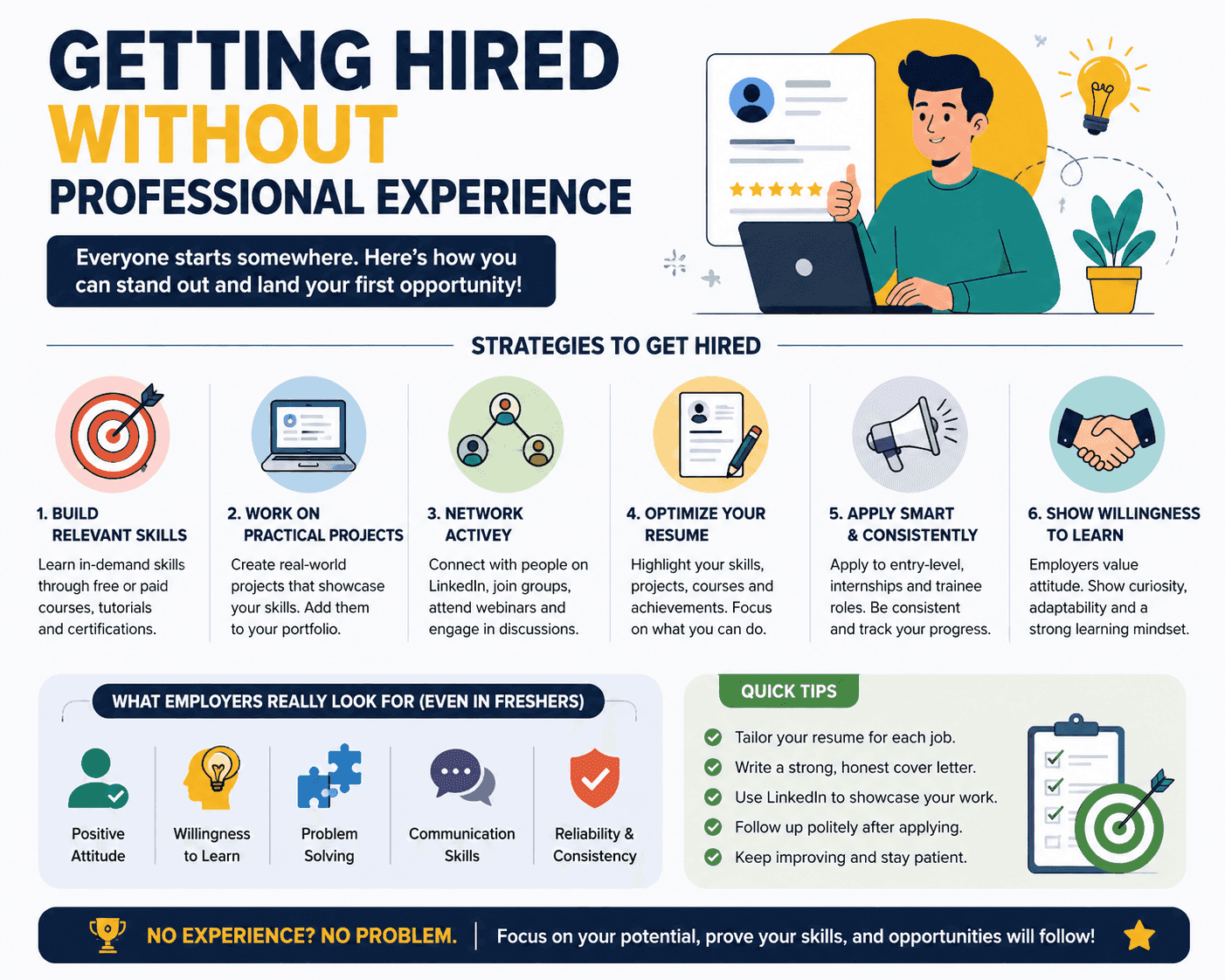
Getting hired without professional experience
The path exists, and it is narrower than bootcamp marketing suggests but wider than the discouraged corners of the internet claim.
Freelance and contract work first. A handful of paid projects for real clients, however small, changes your application from a career changer to someone with a client history. Local small businesses, nonprofits, and restaurants in San Francisco routinely need site work and are reachable without a hiring process. Charge something, even if it is low, because paid work is what makes it citable.
Build for a specific domain rather than building generic demos. Three tutorial projects with different colour schemes read as noise. One tool that solves a real problem for a real group of people, deployed, with users, reads as an engineer. The difference in response rate is significant.
Contribute to open source, particularly to tools you use. Documentation fixes and small bug fixes count. It puts your name in front of people who work at companies you want to work for, and it produces a public record of you working inside someone else's codebase, which is what the job actually is.
Take the unglamorous first role. An internal tools job at a non-tech company, a contract position, or a support engineering role with a coding component all convert into stronger applications twelve months later. The first job is the hardest gate in the market, and optimising for prestige at that stage extends the search considerably.
Use the local community. San Francisco has an unusual density of meetups, hackathons, and technical events, and referrals move applications past automated screening in a way that no amount of application volume does. Most people underuse this because it is uncomfortable, which is precisely why it works.
Application strategy that survives the funnel
Volume alone does not work in this market. Twenty tailored applications outperform two hundred generic ones, and the difference is in three things.
Match the posting's own language in your resume, because screening systems and busy recruiters both scan for the specific terms in the job description. If they wrote TypeScript and you wrote JavaScript, you may not clear the first filter.
Lead with shipped work, not with coursework. A resume line reading "built and deployed a scheduling tool used by a local clinic, cutting no-shows" beats a list of technologies every time. Put links to live projects at the top, not the bottom.
Apply within the first few days of a posting going live. Application volume in this market means later applications often go unread regardless of quality. Set alerts rather than browsing weekly.
For startups specifically, write two or three sentences about their actual product. Hiring managers at small companies read these and the majority of applicants do not bother, which makes it a cheap differentiator.
The location question
Remote-first hiring narrowed after the widespread return to office, and a meaningful share of San Francisco postings now specify hybrid attendance. Read the location field carefully, because postings marked San Francisco increasingly mean in-office attendance for part of the week rather than remote work from anywhere.
This matters for anyone considering relocation. The cost of living in San Francisco is among the highest in the United States, which changes how you should read compensation numbers relative to other markets. Run the arithmetic on rent and taxes against a specific offer before treating a higher headline figure as an improvement. Nearby markets including Oakland and the wider Bay Area carry different cost profiles for roles that draw from the same employer pool.
Researching pay properly
Compensation for these roles varies widely by company stage, and published averages blur categories that behave very differently. Rather than relying on a single figure, build your own picture from current sources.
Check Levels.fyi for company-specific data at larger employers, since it separates base salary, equity, and bonus rather than reporting a single number. Cross-reference with Glassdoor and the US Bureau of Labor Statistics for a wider baseline. California pay transparency law requires many postings to include a salary range, so reading current listings in your target category gives you live data rather than aggregated history.
At startups, treat equity as a separate conversation. Ask for the number of shares, the total outstanding, the strike price, and the most recent valuation, because a percentage figure without those is not information you can evaluate.
Frequently asked questions
Are companies in San Francisco still hiring web developers in 2026?
Yes, though mostly under other titles. Frontend engineer, full stack engineer, and product engineer postings cover the same work. Hiring is concentrated in funded startups and in non-tech employers who need internal web work, with large technology companies running slower and more selective processes. Verify current volumes against live listings, since conditions in this market change quickly.
Can I get a web developer job in San Francisco without a degree?
Yes. Web development is one of the more credential-flexible areas of software hiring, and startups in particular weight demonstrated work over education. Large companies apply stricter filters, and a degree matters more for visa sponsorship. A portfolio of deployed projects and any paid client work substitutes for formal education in most of the market.
What skills do San Francisco employers ask for most?
JavaScript and TypeScript, React with Next.js, strong CSS, a backend language such as Node or Python, SQL, Git, and cloud deployment. Beyond the stack, employers consistently value performance debugging, testing habits, and the ability to review AI-generated code critically.
Do I need to live in San Francisco to apply?
For hybrid roles, which are now a large share of postings, yes or you need a firm relocation plan. Fully remote roles at Bay Area companies still exist but attract national competition. Being local is a genuine advantage for referrals and meetups, and some employers will not consider candidates who cannot start onsite.
How long does it take to find a first web developer job?
The realistic range for a candidate without professional experience is several months of consistent effort, and it depends more on portfolio quality and referral access than on application volume. Candidates who take contract or non-tech roles first typically reach a target role faster than those who hold out for a startup or big tech position from the start.
Is a bootcamp worth it for San Francisco web developer jobs?
It depends on what you use it for. Bootcamps are useful for structure and for cohort connections, and much less useful as a credential, since employers do not weight them heavily. The outcome data varies enormously by programme, so ask any provider for verified placement figures with methodology before enrolling, and confirm them independently.
Start with the listings that match your level
The largest cause of a stalled search is aiming at the wrong tier, not a lack of skill. Filtering for roles you can realistically clear right now, then moving up after twelve months of employed experience, is faster than repeatedly applying to positions with an experience filter you cannot pass.
TheFutureJobs lists entry-level and no-experience roles across US markets, including San Francisco, so you can find the openings that fit where you are rather than where you want to be in three years.
Editor verification note
This draft was written without web access. The following need checking before publication.
No salary figures, ranges, or averages are included. If the target keyword requires them, source them from Levels.fyi, Glassdoor, or the Bureau of Labor Statistics with a collection date and a named source, and separate base pay from equity.
All hiring market claims (relative volume by company tier, share of hybrid versus remote postings, whether hiring has grown or contracted) are unverified. Check against live listing counts on LinkedIn, Indeed, or a hiring data source and add a dated citation.
Technology stack expectations should be validated by sampling current San Francisco job listings rather than assumed. React and Next.js dominance in particular should be confirmed against a current sample.
The reference to California pay transparency requirements should be checked against the current statute and its thresholds before publication.
Cost of living comparisons are stated qualitatively and should be supported with a dated source if quantified.
Confirm that named resources (Levels.fyi, Glassdoor, BLS) are still appropriate recommendations and that links are live.
Add a published date and a review date, since job market content dates quickly.
Suggested internal links: existing TheFutureJobs pages for entry-level tech roles, San Francisco listings, and any resume or portfolio guidance content.
Give us a call
Related Blogs
SaaS Video Editor Jobs in San Francisco: What to Know Before You Apply
GPT-6 Astra and California tech hiring: what employers should change in 2026
Digital marketing jobs in the USA for freshers: roles, salaries, and how to actually get hired
Best AI Hiring Agency in the US: How to Choose the Right Partner in 2026
Claude AI as a Job Search Agent: What It Can (and Can't) Do for Job Seekers in the USA
Junior backend developer jobs in San Francisco: where to look and how to get hired
Top 10 IT Recruitment Agencies in California (2026)
WordPress developer jobs in the US: how hiring agencies actually fill them
AI UGC Video Editor Hiring Agency in San Francisco | TheFutureJobs
Content marketing jobs in Texas and New York: what hiring agencies are actually filling in 2026

Team
Legal
Privacy Policy
Legal & Rights